
Beyond the Furnace Repair Manual: The Nitty-Gritty Furnace Problems That Demand Real Diagnostic Expertise in Edmonton
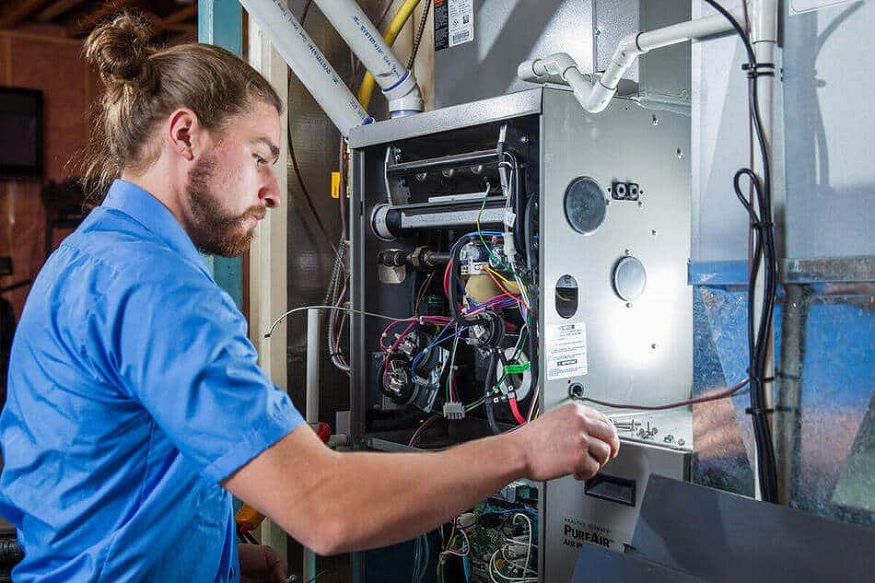
A furnace can seem perfectly ordinary right up until you don’t get the benefits you deserve. Most failures develop from a recognizable trail, but some problems are intermittent and annoying. They seem to disappear the moment a technician arrives with a meter and a flashlight. That is where experience starts to matter differently. The challenge is no longer finding a failed part. It is understanding how combustion, airflow, temperature, electronics and the building itself interact—and knowing which clue actually matters.
1. The “Phantom” Flame Failure That Keeps Coming Back
Few furnace problems frustrate technicians more than an intermittent flame failure. The system may operate normally for hours, then suddenly report that it cannot confirm the flame. By the time someone investigates, everything appears perfectly functional.
The flame sensor itself is not always the culprit. Emergency Furnace Repair Edmonton professionals diagnose the entire flame-rectification systems including micro-amp output and connectors. The stem depends on a very small electrical signal, so seemingly minor changes can affect what the control board sees. Contamination, grounding problems, combustion conditions, wiring faults or subtle airflow changes can all enter the picture.
That changes the diagnostic mindset.Instead of immediately replacing the sensor, an experienced technician may investigate:
- Flame-signalbehavior over repeated cycles;
- Grounding and electrical continuity;
- Combustion and airflow conditions;
- Whether the failure occurs only under particular operating conditions.
This is detective work more than parts replacement. The goal is to reproduce the failure and identify its cause, not simply make the symptom disappear for another few days.
2. Heat Exchanger Problems That Only Reveal Themselves under Stress
A heat exchanger lives through cycles of expansion and contraction. As such, components that are under constant stress may have micro-cracks that may look perfectly acceptable during a quick visual inspection.
That is why some suspected heat-exchanger problems are difficult to evaluate. A tiny defect may not be obvious under ordinary conditions, while changes in temperature and operating conditions can alter what technicians observe.
There is an important safety distinction here: suspected heat-exchanger damage is not an area for homeowner experimentation. The potential consequences of combustion-gas leakage make proper professional assessment essential.
For a technician, the challenge is to establish whether there is genuine damage and whether the furnace can operate safely. Depending on the equipment and applicable standards, that may involve specialized inspection and testing equipment rather than simply looking through the access panel.
The expertise lies partly in knowing what not to assume.A suspicious sound, unusual combustion behavior or safety concern deserves investigation, but one symptom should not automatically become a diagnosis.
Read More: Need 1 Lakh Now? How to Get an Instant Loan on the Same Day
3. Condensate Problems That Look Like Electrical or Pressure Failures
High-efficiency condensing furnaces introduce another layer of complexity: water management.During operation, condensation is produced and must be removed through the furnace’s drainage system. When drainage becomes restricted, incorrectly configured or affected by freezing conditions, the resulting symptoms can be surprisingly indirect.
A homeowner might see a furnace that repeatedly shuts down and assume the problem is electronic. A technician may instead discover that a drainage issue is affecting pressure conditions and causing a safety control to interrupt operation.
That is why chasing the final symptom can waste time. A useful diagnostic process considers the relationship between:
- Condensate production
- Drainage and trap conditions
- Pressure-related controls
- Venting
- Furnace operating cycles.
The solution also needs to respect the manufacturer’s design. Improvised drainage modifications may create another problem while appearing to solve the first.
For complicated condensate faults, the objective is not merely to restore operation. It is to understand why water is accumulating or failing to drain correctly and correct the underlying condition safely.
4. The Furnace That Sounds Wrong Even When Everything Tests “Normal”
Noise can be one of the most misleading furnace complaints.A homeowner may describe a hum, vibration, whistle or low-frequency rumble that seems to travel through the walls. Yet when the furnace is inspected, the major components may appear mechanically sound.
Sometimes the issue is not a broken component at all. The interaction between blower operation, ductwork, mounting surfaces and airflow can create vibration or resonance at particular operating speeds.
That makes the building part of the diagnostic picture.Rather than automatically replacing a blower motor because it sounds unusual, an experienced technician can consider whether the noise changes with operating speed, airflow demand or particular sections of the duct system. The investigation may involve acoustic or vibration measurements when the problem is particularly persistent.
This is where specialization becomes valuable. The right solution might involve correcting an installation issue, addressing an airflow imbalance or modifying how vibration is transmitted—not installing another expensive component simply because the original one was blamed first.
Read More: How to Choose a Reliable Gear Pump Manufacturer for Your Business
In essence, the hardest furnace problems are rarely solved by having the longest list of replacement parts. For a homeowner, that distinction is worth understanding. “The part looks fine” is not the same as “the system is operating correctly.” Professional service is valuable precisely because modern furnace diagnosis requires measurements, interpretation and context—not educated guessing followed by a parts invoice.